

The best questions to ask before your dog’s first daycare day are the ones a brochure won’t cover. Ask how the facility screens new dogs for temperament, which vaccines it requires and how recently it verifies them, the staff-to-dog ratio during play versus rest, how groups get separated by size and play style, and what happens if a dog is injured or a scuffle breaks out. Vaccine requirements should at minimum cover rabies, distemper-parvo, and bordetella, with canine influenza increasingly expected at busier facilities. A daycare that answers these clearly is one you can trust; one that brushes them off has told you what you need to know.
Stack Veterinary Hospital has cared for Syracuse dogs since 1910 and has maintained AAHA accreditation for 65 consecutive years, so families know we hold ourselves to a defined standard. We provide boarding for dogs in Central New York alongside our comprehensive medical care, so we field daycare-readiness questions all the time. If you want to know whether your dog’s vaccines meet a facility’s requirements, whether they’re on the right parasite prevention program, whether a medical condition could limit their playtime, or whether daycare is a good social fit in the first place, we’re here to answer all your questions. Reach out to our team for a pre-daycare evaluation.
The Short Version Before the First Drop-Off
- The questions you ask before the first drop-off are your single best filter, because how a facility answers tells you more than any spotless lobby.
- Vaccines and cleaning protocols lower the risk of disease and injury in group settings but do not erase it, which is why a symptom check at pickup still matters.
- Not every dog is built for the noise and motion of group play, and a quieter setting like boarding is a valid choice for the ones who aren’t.
- A wellness visit a week or two before a trial day sorts vaccines, parasite prevention, and behavior questions, so the trial can be only about whether your dog enjoys the group.
How Do You Get a Dog Ready for Their First Day?
Get your dog ready by handling the health and logistics ahead of time: a wellness visit, up-to-date parasite protection, a recent fecal check, and paperwork in hand. Be honest with staff about anything they should know, and plan a short trial day. That way the first session is only about whether your dog enjoys the group.
Trial Sessions and Honest Communication
The best transitions happen gradually, with short trial sessions and calm, low-drama drop-offs. A long, emotional goodbye teaches a dog that leaving is a big deal; a matter-of-fact handoff tells your dog this is just part of the day. Be honest with staff, even about the awkward stuff: medication schedules, anxiety triggers, physical limitations, and any behavioral tendencies you know about. The dog who “sometimes guards the water bowl” is much safer when the people watching are aware of it.
Handling Health and Logistics Ahead of Time
The practical prep clears the way for a good first day:
- Book a wellness visit a week or two ahead: Time to update anything lapsed and sort documentation.
- Update preventives and run a recent fecal exam: Current heartworm, flea, and tick prevention plus a clean fecal check.
- Gather your documentation: Vaccine records and required forms, ready to hand over.
- Plan a short trial day: A brief first session tells you a lot without overwhelming your dog.
- Feed lightly before drop-off: A big meal right before active play can upset the stomach.
- Know what a healthy pickup looks like: Pleasantly tired and happy is the goal; wired, cranky, limping, or hiding suggests shorter visits or a rethink of the fit.
We can keep your dog current on preventive care through our wellness visits, and if anything looks off on a daycare day, we handle same-day sick visits during our regular hours.
Which Vaccines and Preventives Will a Facility Insist On?
Ask exactly which vaccines a facility requires and how it verifies them, because a dog with lapsed vaccines is a risk to every other dog in the room. Typical requirements include rabies (non-negotiable anywhere reputable), distemper-parvo (DHPP), and bordetella for kennel cough. Canine influenza may be required where dog flu has circulated, and leptospirosis is also on the list for some; regional factors and a facility’s policies shape the exact list.
Routine fecal testing matters because intestinal parasites pass easily between dogs in shared yards and often show up before a dog looks sick. Year-round heartworm, flea, and tick prevention rounds out the picture, and most facilities require a symptom-free stretch before a sick dog returns. We can confirm vaccine timing and provide vaccine documentation and a prevention plan tailored to daycare dogs, so your dog clears the requirements without a scramble at the front desk.
Which Illnesses Move Through a Group of Dogs?
Group settings raise the odds of catching something contagious even with solid cleaning and vaccine rules, simply because more dogs share more air, water, and surfaces. The best defense is the unglamorous one: current vaccines, consistent parasite control, and keeping a sick dog home. The main players in group care:
- Parvovirus: the disease vaccine requirements largely exist to keep out of the building.
- Leptospirosis: a bacterial infection spread through contaminated water and urine.
- Kennel cough: travels through the air in close quarters.
- Canine influenza: the dog flu that moves quickly through a group.
- Oral papilloma virus: usually harmless warts that spread through shared toys and clear on their own.
If a dog comes home under the weather, we run in-house diagnostics for post-daycare illness to figure out what is going on quickly. Most of these are preventable through vaccination.
Spotting Parasites and Skin Trouble After Group Play
Shared yards and close contact raise the risk of parasites and contagious skin conditions, and routine fecal testing catches intestinal infections early even when a dog’s stool looks normal. Most of what shows up after group play is minor and treatable, but a few things are worth watching for:
- Giardia: a common culprit behind loose stools, picked up from contaminated water and confirmed with a fecal test.
- Ringworm: a fungus rather than a worm, marked by circular patches of hair loss and spread through direct contact and shared bedding.
- Sarcoptic mange: a highly contagious mite behind intense itching and crusting that warrants prompt evaluation.
Diarrhea that lingers, persistent scratching, or any patch of hair loss is worth a call rather than a wait. Bring your dog in and our team can evaluate contagious skin conditions or parasites that turn up after a daycare visit and get the right treatment started.
Which Post-Pickup Signs Mean a Trip to the Vet?
Even a well-run daycare has the occasional bump, so a quick once-over after every pickup is smart. Run your hands over your dog’s body, check the paws and pads, look at the eyes, and notice any spot that makes your dog flinch. Most of what you find will be nothing, and a minor scrape can be cleaned at home and watched.
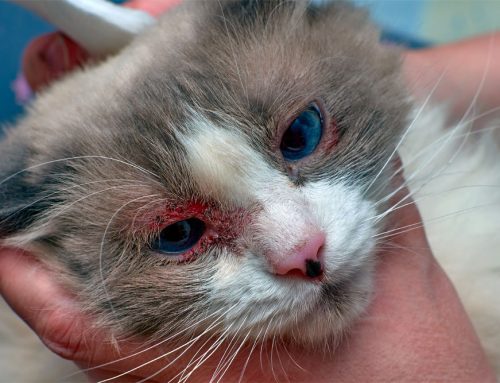
Two things deserve more attention. Redness, squinting, pawing, or discharge from an eye can signal conjunctivitis or an injury, and eyes are not something to wait on. And even a small puncture warrants a closer look, because bite wounds seal over at the surface and trap bacteria underneath where infection builds unseen. If you find swelling, tenderness, or any discharge from a wound, reach out right away rather than watching it another day.
What Separates a Quality Daycare From a Merely Clean One?
A good daycare is built on safe play, structured rest, attentive supervision, thoughtful dog matching, quick reads on stress signals, and honest communication. The building can be spotless while the play floor is a free-for-all, so the fundamentals live in how the place runs, not how it looks. A quality daycare does more than burn off energy, because structured socialization builds confidence and teaches a dog to read other dogs.
Quality varies dramatically, so direct questions matter more than first impressions. When you tour, look at:
- Staff training: Handlers name what they watch for in body language and what they do when tension builds, not just “the dogs work it out.”
- Ratios: Enough people on the floor to see every dog, with more coverage during busy play.
- Grouping: Dogs sorted by size, age, energy, and play style, not lumped into one big pile.
- Communication: The facility tells you how your dog’s day went, including the rough patches.
A trial day tests all of this, and it’s worth getting vaccines, parasite prevention, and behavior readiness sorted beforehand so the trial is about temperament, not paperwork.
How Do You Read the Facility Itself?
The building matters as much as the people, and how a facility answers questions about its space tells you how it runs when conditions aren’t ideal. Central New York throws real weather at a daycare, from humid Syracuse summers to bitter winters, and a good facility has a plan for both. Ask about:
- Climate control: How the space stays comfortable in a July heat wave and a January cold snap, and whether outdoor time is limited on extreme days.
- Heat and weather emergencies: Staff know the early signs of overheating and how to cool a dog fast; flat-faced breeds, seniors, overweight dogs, and dogs with heart or airway issues overheat faster.
- Enrichment on indoor days: Indoor activities when it is too hot, cold, or wet to go out.
- Toys and resource guarding: How staff manage toys and food so guarding does not spark fights.
- Cleaning protocols: Regular disinfection of floors, water bowls, and shared surfaces on a clear routine.
- Play surfaces: Footing that is quick to clean, with shade and water outdoors.
If your dog ever comes home overheated or showing worrying signs, we provide emergency and urgent care during our regular hours.
On the Tour, What Should You Learn About Staffing and Supervision?
Learn who is watching the dogs and how well trained they are. A good facility answers each question specifically and without hesitation; a careless one stays vague. The goal isn’t a place where conflict never happens, because that doesn’t exist. It’s one that prevents most problems early and handles the rest well. Here is what to ask, and what a good answer sounds like:
| What to ask | What a good answer includes |
|---|---|
| What is the staff-to-dog ratio? | A specific number that drops for busier play, not “we keep an eye on things.” |
| How are handlers trained? | Real training in body language, first aid, and de-escalation, not just “they love dogs.” |
| Do you screen temperament and run trial days? | Yes, every new dog is assessed before joining a group. |
| How are dogs grouped and introduced? | By size, age, and play style, with new dogs added carefully. |
| What happens when a dog gets stressed? | The dog gets a break in a quiet space, and staff watch for the cause. |
| Can I watch the play area? | Cameras, a viewing window, or an open invitation to observe. |
| What are the rest protocols? | Scheduled downtime, not all-day nonstop play. |
| What happens if a dog is injured? | First aid training and a plan for prompt vet care. |
Red flags run the other way: no screening, no rest periods, one person watching thirty dogs, or a shrug when you ask what happens after a scuffle.
Is Your Dog Built for Group Play?
Daycare fits a lot of dogs and suits plenty of others poorly, and neither says anything about whether a dog is “good.” Some thrive on the movement and company; others find a room full of strangers stressful. Tolerance also shifts with age, so the social butterfly at two may want more space at nine.
The clearest signal comes from body language. A dog who bounds toward the door and comes home pleasantly tired is telling you it’s working; a dog who plants at the entrance, hides all day, or comes home wired and cranky is telling you something else. For dogs who run anxious or reactive, we offer behavior counseling as a part of our wellness care to help you decide whether a trial day makes sense at all.
When Is Boarding a Better Fit Than Daycare?
For dogs who prefer a quieter setting, need one-on-one attention, or have medical needs that make group play risky, boarding is often the safer and kinder option. A dog managing a chronic illness, on a daily medication schedule, or recovering from surgery does better where staff can watch closely and skip the wrestling matches. Ask us about our boarding services at Stack.
Supervised Daycare vs. the Dog Park: Which Is the Safer Bet?
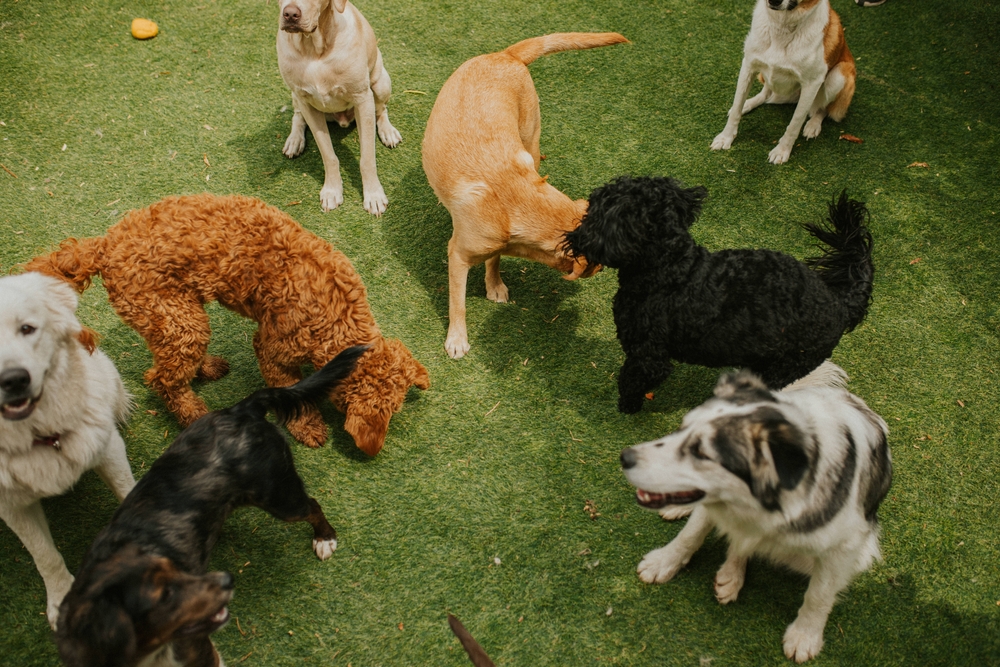
A well-run daycare is usually the safer bet, because it screens every dog before they join the group, keeps trained staff on the floor all day, and takes responsibility for what happens there. A dog park, by contrast, offers none of those safeguards.
A good daycare’s structure is the whole point of paying for one: matched groups, handlers who intervene early, and a record of which dogs are vaccinated and how they play. None of this makes dog parks universally bad. A confident, social, well-vaccinated dog with an attentive person at a quiet park can have a wonderful time. The honest question is whether your dog’s temperament and health are better served by a supervised setting, and we are happy to talk through your dog’s temperament and health needs and help you weigh the two.
How Old Should a Puppy Be Before Starting Daycare?
A puppy should finish their core vaccination series before joining general daycare, because a developing immune system plus a room of unfamiliar dogs invites exposure they can’t yet fight off. Some facilities offer dedicated puppy groups with stricter health requirements that are appropriate for puppies who are further along in their vaccine series. The window for puppy socialization closes early, so holding off on all socialization until the full vaccine series is complete does a puppy more harm than good.
Before you commit to a puppy program, ask about age-matched groups, short sessions, frequent cleaning, separation from adult dogs, and lower staff ratios with handlers trained in puppy body language. The answers tell you quickly whether a program is genuinely built for puppies or is simply regular daycare with a younger crowd.
Preparing Your Dog For Daycare, Done Right
The right daycare for the right dog is a genuine gift, providing a social dog a fun, structured outlet and giving you peace of mind during a long workday. The wrong fit creates problems, so it is worth being choosy. A strong facility protects health, supervises play closely, requires appropriate vaccines, and takes rest as seriously as play.
Our role is the medical side of that decision: updating vaccines, evaluating temperament, and preparing the documentation a facility will ask for. And if daycare turns out not to be your dog’s thing, boarding is a safe, comfortable alternative for quieter dogs. When you are ready, book a pre-daycare exam or vaccine update and we will help you set your dog up for a great first day, whichever direction fits best.



Leave A Comment